
Metamask: How do I execute functions in my ERC20 token?
Performing features on ERC20 token: Step by step
As a developer of the ERC20 token, he is likely to be eager to bring the project to the next level by integrating unique functions. One of the exciting services that allows this to perform features in the token. In this article, the ERC20 Token will be used to immerse themselves on how to implement them on the Ropsten test network.
Prerequisites
Before you start, make sure you have:
- Remix installed here (
- Your ERC20 Tokenje for a local development environment (such as truffles or hard).
- Active Metamask wallet on your computer.
- Knowledge of strength and javascript.
Import the token from remix
To import the ERC20 token, follow these steps to the remix:
- In the remix, move on to
Network>Testnets.
- Select “Ropsten Testnet” (or any other test network supported by the remix).
- Click “New Block” and enter a new block number.
- Import the ERC20 token using the following syntax:
`Solidity
Pragma solidity ^0.8.0;
Import "
import "./erc20.sol";
The MyYtoken contract is the ERC20 {
Function Myfunction () Public Payment Yields (Uint256) {
// the unique logic of the function
uint256 balance = getbalance ();
return balance;
}
}
Replace “MyTOKEN” with the actual contract name and “Myfunction ()” to the function you want to execute.
Installation token at Ropsten Testnet
To install the token at Ropsten Testnet:
- Go back to the remix and select the imported contract.
- Click “Install” (or use the shortcut CTRL+D) to install the contract.
- Wait for the installation to be completed.
Perform functions in metamask
By installing the token, you can now perform the functions from Metamask:
- Open Metamask on your computer.
- Sign in with your wallet.
- Go to
chain>Testnets'.
- Select Ropsten Testnet (or any other supported network).
- Click “Connect Wallet”.
- Select your account and connect it to Metamask.
Testing features
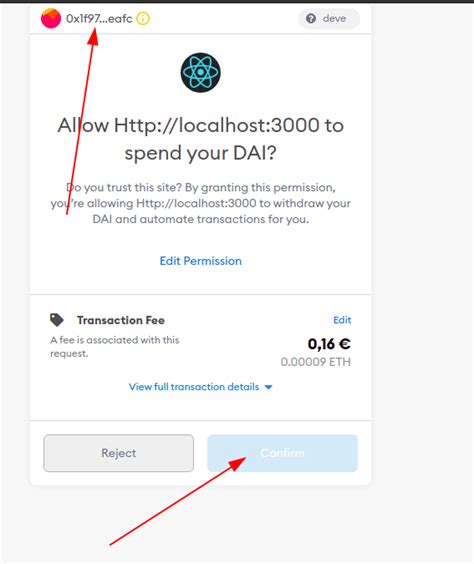
Now that you have performed a feature, check its behavior:
- Use the extension or command line tools of the Metamask built -in browser to interact with the contract.
- Call "Myfunction ()" and check your token balance after execution.
Here's an example of a use of use in the remix:
Solidity
Pragma solidity ^0.8.0;
Import "
import "./erc20.sol";
The MyYtoken contract is the ERC20 {
Function Myfunction () Public Payment Yields (Uint256) {
// the unique logic of the function
uint256 balance = getbalance ();
return balance;
}
}
`Javascript
CONST TOCENCONCENTRACT = New MyYtoken ();
// Call the individual function from Metamask
Tokencontract.myfunction (). Then ((result) => console.log (result));
The best exercises and considerations
When performing features, keep in mind the following proven exercises in the ERC20 token:
- Use secure coding exercises when writing individual logic.
- Make sure the contract balance is updated correctly after implementation.
- Test thoroughly to catch any error or unexpected behavior.
- Keep your contracts up to date with the latest solidity and javascript versions.
By performing features from the ERC20 token, you can use the remix to release a wide range of innovative applications. Don’t forget to follow the best exercises and take care of possible security risks when developing individual functions.
Leave a Reply
Want to join the discussion?Feel free to contribute!