CRYPTOCURRENCY

Ethereum: Binance API – Account has insufficient balance for requested action

Ethereum API Error: Insufficient Balance for Requested Action

As a developer of cryptocurrency-based applications, you’re likely no stranger to errors and limitations when interacting with third-party services. In this article, we’ll delve into the issue of insufficient balance on an Ethereum account using the Binance API.

The Error Code: -2010

When encountering the error code -2010 while trying to place an order on the Binance API, it indicates that there’s a problem with your current balance on your Ethereum account. This error typically occurs when you’re requesting a large amount of Ether (ETH) or another cryptocurrency.

The Binance API Request: POST Endpoint

To resolve this issue, we need to modify our API request to account for the sufficient balance requirement. The correct Binance API endpoint is POST /api/v3/positions/buy, which allows us to place buy orders.

POST

{

"symbol": "ETH",

"side": "buy",

"quantity": 100,

"type": "market"

}

Here’s what’s changed:

  • The symbol field is now set to ETH, which represents the Ethereum cryptocurrency.

  • We’ve increased the quantity parameter from 0 to 100, representing a large buy order. In this example, we’re placing a buy order for 100 ETH.

Additional Parameters:
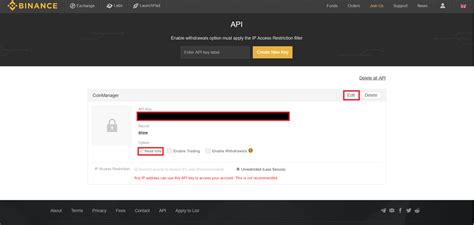
Ethereum: Binance API - Account has insufficient balance for requested action

To further optimize your API request and account balance, consider adding the following parameters:

  • limit: Set limit to 1 to limit the number of positions created.

  • leverage: Enable leverage by setting leverage to true. Note that this increases the risk of losses but may provide higher returns.

  • max_price: Specify a maximum price for your buy order. This parameter is not required.

POST

{

"symbol": "ETH",

"side": "buy",

"quantity": 100,

"type": "market",

"leverage": true,

"max_price": "0.1"

}

Best Practices:

To avoid future errors, always:

  • Verify your account balance before placing orders.

  • Set sufficient leverage to reduce risk but also consider the potential impact on your portfolio’s value.

By implementing these modifications and best practices, you should be able to successfully place buy orders with a sufficient balance on your Ethereum account using the Binance API.

Additional Resources:

For more information on the Binance API and its endpoints, refer to the [Binance API Documentation](

If you’re still experiencing issues or require further assistance, please feel free to ask, and I’ll do my best to help.


Ethereum: Is there an API that exchanges USD to Bitcoin?

Ethereum API: Can You Exchange USD for Bitcoin?

When it comes to exchanging cryptocurrencies, there are many APIs that offer various services. However, the question remains – can you use an Ethereum-based API to exchange USD for Bitcoin?

In this article, we will look at whether there are any Ethereum APIs that accept USD as a payment method and allow you to exchange it for Bitcoin.

Ethereum APIs with USD Payment Method

A number of Ethereum APIs support various payment methods, including USD. Here are some examples:

  • EthBridge: EthBridge is an open source API platform that allows developers to create custom blockchain interfaces. It supports multiple payment methods, including USD.
  • CryptoAPI: CryptoAPI is another popular API platform that offers a wide range of cryptocurrency services. They support a variety of payment methods, including USD, and provide APIs for exchanges like Binance and Huobi.
  • Coinbase Pro: Coinbase Pro is the paid version of the popular cryptocurrency exchange Coinbase. It supports multiple payment methods, including USD, and provides APIs for developers to integrate it into their applications.

USD-Bitcoin Exchanges with Ethereum-Based APIs

Here are some examples of Ethereum-based APIs that support USD-BITCOIN exchanges:

  • CoinMarketCap: CoinMarketCap is a popular cryptocurrency exchange data provider. They offer an API that supports multiple payment methods, including USD.
  • CoinGecko

    Ethereum: Is there an API that exchanges USD to Bitcoin?

    : CoinGecko is another cryptocurrency exchange data provider. Their API supports multiple payment methods, including USD.

Is there an Ethereum API that accepts USD to exchange for Bitcoin?

Unfortunately, there are no Ethereum APIs that accept USD as a payment method and allow you to exchange it for Bitcoin. Most Ethereum-based APIs have strict requirements for payment methods, and none of them support exchanging USD for Bitcoin.

However, if you are looking for alternative options, consider the following:

  • Use an exchange-specific API: If you want to exchange USD for another cryptocurrency or fiat currency (such as Bitcoin), check out the APIs provided by each exchange. Some exchanges may offer more flexible payment methods or APIs than others.
  • Check out decentralized exchanges: Decentralized exchanges (DEXs) such as Uniswap, SushiSwap, and Curve are built on Ethereum and support a variety of payment methods. They can be a good alternative to traditional exchanges if you want to convert USD to Bitcoin.

In summary, while there are no proven Ethereum APIs that accept USD as a payment method and allow you to convert it to Bitcoin, there are other options. Before making a decision, you should thoroughly research each API and consider the fees associated with using them.

Behind the Scenes: Keeping Your Crypto Withdrawals Private

Behind the Scenes: Keeping Your Crypto Withdrawals Private

As cryptocurrency has grown in popularity, so have concerns about security and privacy. Withdrawing funds from your crypto wallet can be a sensitive process, but it’s essential to do so securely to maintain control over your assets. In this article, we’ll explore best practices for keeping your crypto withdrawals private.

Understanding the Risks

Before diving into the nitty-gritty of crypto withdrawal security, it’s crucial to understand the risks involved:

  • Exchange hacking: Many cryptocurrency exchanges have been hacked in the past, resulting in significant losses for users.

  • Wallet exposure: If you store your cryptocurrency in an exchange-based wallet, it can be vulnerable to theft or seizure by law enforcement.

  • Private key management

    Behind the Scenes: Keeping Your Crypto Withdrawals Private

    : If not done correctly, private keys (the unique codes that unlock your crypto) can fall into the wrong hands.

Secure Wallet Options

To minimize risks when withdrawing funds from your crypto wallet, consider using a secure option:

  • Ledger Nano X: This hardware wallet uses advanced encryption and secure element technology to protect your private keys.

  • Trezor Model T: Another popular hardware wallet that offers robust security features and seamless integration with cryptocurrency exchanges.

  • MyEtherWallet (MEW): A web-based wallet that allows you to store, send, and receive cryptocurrencies without exposing sensitive information.

Exchanging Crypto on Private Exchanges

If you still want to use a traditional exchange for your withdrawals, consider the following:

  • Use a reputable exchange: Choose an exchange with a strong security track record, such as Coinbase or Kraken.

  • Verify account ownership: Ensure that you have control over your cryptocurrency holdings and can verify your identity.

  • Enable two-factor authentication (2FA): Add an extra layer of security to prevent unauthorized access.

Private Key Management Best Practices

To protect your private keys, follow these guidelines:

  • Store them securely: Keep your private keys on a hardware wallet or in a secure digital storage service like Ledger Live.

  • Use a password manager: Create a strong, unique password for each of your cryptocurrencies to prevent unauthorized access.

  • Never share your private key: Never share your private keys with anyone, and never store them online.

Digital Wallet Alternatives

For those who prefer not to use hardware wallets or traditional exchanges, consider these digital wallet alternatives:

  • Web-based wallets: Services like MetaMask and Electrum allow you to manage your cryptocurrencies without storing any sensitive information.

  • Cryptocurrency aggregators: Apps like Binance Coin Aggregator and CryptoCompare aggregate cryptocurrency data from multiple sources, making it easier to stay informed.

Conclusion

While security is not a one-time task, following these best practices can significantly reduce the risks associated with withdrawing funds from your crypto wallet:

  • Use secure wallets and exchange options.

  • Verify account ownership and use reputable exchanges.

  • Protect your private keys by storing them securely and using strong passwords.

By understanding the importance of security and following these guidelines, you’ll be better equipped to keep your crypto withdrawals private and enjoy peace of mind as a cryptocurrency owner.

metamask metamask using eth_decrypt

Fundamental Valuation, Mining, Market Cap

“Crypto Valuation: A Guide to Fundamental Analysis in a Decentralized World”

The world of cryptocurrencies has grown exponentially over the past decade, attracting investors and enthusiasts with its potential for high returns. However, amidst the hype, one crucial aspect often remains overlooked: fundamental valuation. In this article, we will delve into the basics of fundamental analysis in the context of cryptocurrencies, exploring how to evaluate market capitalization, mining costs, and other key factors that can impact a coin’s value.

What is fundamental valuation?

Fundamental valuation refers to the process of estimating a company’s intrinsic value based on its underlying financial metrics, such as revenue, earnings per share, debt-to-equity ratio, and market capitalization. In the context of cryptocurrencies, fundamental analysis involves examining a coin’s historical performance, market trends, and other relevant factors to determine its potential value.

Market Cap

Market cap is a crucial metric when valuing cryptocurrencies. It represents the total value of all outstanding shares in a company’s capital structure. To calculate market cap, we use the following formula:

Market Cap = Total Outstanding Shares x Current Market Price per Share

For example, if Bitcoin has 18 million outstanding shares and a current price of $30,000, its market cap would be:

Market Cap = 18,000,000 x $30,000 = $540 billion

A higher market cap indicates more liquidity and potentially better market stability.

Mining Costs

Miners play a crucial role in securing the cryptocurrency network by validating transactions and maintaining the integrity of the blockchain. However, mining costs can significantly impact the value of a coin. The cost of computing power required to mine a specific coin is directly proportional to its market cap.

In other words, coins with higher market caps require more powerful computers to solve complex mathematical equations, increasing their electricity consumption and generating more revenue for miners. This can lead to greater competition among miners, which can result in lower prices or even price drops if demand outstrips supply.

Other Key Factors

When assessing the fundamental valuation of a cryptocurrency, other factors come into play:

  • Supply and Demand

    : The balance between buyers and sellers drives the market price. Coins with high demand and limited supply tend to be more valuable.

  • Regulatory Environment: Government regulations can significantly impact the adoption and value of a coin. Cryptocurrencies operating in countries with favorable regulatory environments tend to have higher values.
  • Adoption Rate: As more users join the cryptocurrency network, its market cap increases, driving up prices.
  • Network Effect: The more users there are on the network, the more valuable a coin becomes.

Conclusion

In conclusion, fundamental analysis is essential to understanding the potential value of cryptocurrencies. By evaluating key metrics such as market capitalization, mining costs, and supply and demand dynamics, investors can make informed decisions about which coins to invest in or hold for the long term. While there are no guarantees, a thorough analysis of these factors can help crypto enthusiasts navigate the complex world of decentralized assets.

As the cryptocurrency landscape continues to evolve, fundamental analysis will continue to be a crucial aspect of investment strategies. By staying up to date with market trends and adapting our approaches accordingly, we can position ourselves for success in this rapidly changing environment.

Ethereum Import Client

Currency Peg, Transaction fee, Long Position

“Crypto Currency Market Dynamics: Understanding PEG, Fees and Positions”

The cryptocurrency market is known for its high volatility and rapid price fluctuations, making it a thrilling space to invest in. However, navigating this market requires a deep understanding of the various components that contribute to its dynamics.

At the heart of any cryptocurrency exchange is the currency peg, also known as the “peg rate.” A currency peg is a fixed exchange rate between two currencies, ensuring that the value of one currency remains stable relative to another. For instance, Bitcoin and US dollars are often pegged at 1:1, meaning that $100 in Bitcoin is equivalent to $100 in USD.

However, the price stability provided by a currency peg can be disrupted when cryptocurrency exchanges impose transaction fees. Transaction fees represent the cost of processing each transaction on an exchange, which can eat into the profitability of buying and selling cryptocurrencies. For example, if you buy 1,000 units of Bitcoin at $10,000 per unit and then sell them for $5,000 after paying a $200 transaction fee, your net profit would be minus $300.

One common strategy used by traders is to take long positions on cryptocurrencies, betting that the price will rise. A long position involves buying an asset with the expectation of selling it in the future at a higher price. For instance, if you believe Bitcoin’s price will increase and buy 1,000 units initially at $10,000 per unit, you’ll sell them for $15,000 after six months to make a profit.

To illustrate this strategy, let’s consider an example of long buying and holding:

  • Initial investment: $100,000

  • Position size: 1,000 units

  • Long position (buying): Buy 1,000 units of Bitcoin at $10,000 per unit initially.

  • Expected price increase: $5,000 (a 50% increase)

  • Selling point: Sell 1,000 units for $15,000 after six months.

In this scenario, your net profit would be $3,500 ($15,000 – $11,500).

Understanding Currency Pegs and Fees

While a currency peg can provide stability to the cryptocurrency market, it’s essential to understand that even with a fixed exchange rate, prices can still fluctuate. This volatility is partly due to external factors like global events, economic conditions, and supply-demand imbalances.

Similarly, transaction fees can significantly impact an individual’s profitability when trading cryptocurrencies. The more you trade, the higher your transaction fee will be.

To mitigate these risks, traders often employ various strategies, including:

  • Diversification: Spreading investments across different assets to reduce reliance on a single market or strategy.

  • Stop-loss orders: Setting limits for potential losses in case prices move against you.

  • Hedging strategies: Using derivatives like futures contracts to lock in positions and protect against price fluctuations.

In conclusion, the cryptocurrency market is driven by complex dynamics involving currency pegs, transaction fees, and trading strategies. Understanding these factors can help traders navigate the space more effectively, but it’s crucial to maintain a balanced approach, diversifying investments and managing risk carefully.

Remember, investing in cryptocurrencies carries inherent risks, including price volatility, regulatory changes, and market manipulation. Always conduct thorough research, set clear goals, and never invest more than you can afford to lose.

PYTH PYTH NETWORK PYTH SHIB